You're watching...

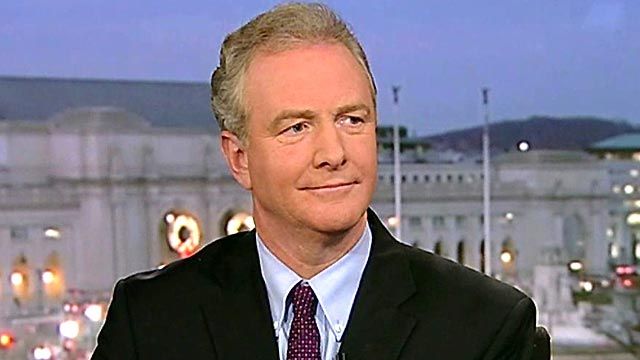
Chris Van Hollen on 'fiscal cliff' negotiations

Details

  • Description

    Key Democrat on 'Special Report'

  • Duration 7:32
  • Date

Clips

Also in this playlist...

Latest News

Auto-advance: ON

Auto-advance

Transcript

This transcript is automatically generated

Let's talk about the fiscal cliff negotiations with one of the key Democrats involved Chris van Holland.

Is a five term represented from Maryland and the ranking member of the House Budget Committee.

Congressman thanks for being here it's great to be with you for British see this process right now.

Well we were waiting for speaker -- to get back got to the president with response -- he's now put something.

In writing the good news is is put something in writing the bad news is it doesn't really get us.

In the moving moving forward but but at least it's a -- a piece of paper that's a change what's talk about that paper the house GOP counteroffer they're saying revenue.

Through tax reform 800 billion health savings 600 billion other mandatory savings 300 billion revision to CPI.

200 billion discretionary savings 300 billion net savings -- point two trillion.

And according to the White House you canning four point six trillion overall.

This is what the house speaker said unfortunately the White House responded with their La La land to offer they couldn't pass the house you couldn't pass the senate.

We've decided.

We -- decided in kind but we decided not to do that why is this -- -- not advancing the ball at least to a discussion.

Well again it's good news that we finally have something on paper.

He references Erskine Bowles the speaker -- -- that letter.

I think -- -- stands by the Simpson Bowles commission recommendations and and their overall framework within which is a mix of cuts.

But also revenue and if you look at the revenues embedded in Simpson goals they're actually greater than the amount of revenues the president has proposed a one point six trillion remember if we go over the fiscal -- That's five trillion dollars in new revenue they would come in the president says he doesn't want to do that but he wants one point.

Six trillion as part of a balanced approach.

From higher income earners and again that's a lower amount of overall revenue -- is -- -- Simpson Bowles on the cuts the presence also proposed cuts going forward.

-- so now it's time to begin.

The conversation now the president's cuts are very different for example when the president does Medicare reform he doesn't.

Pass those costs on to seniors he for example reduces the amount of payments that would go to the prescription drug companies and that kinda thing but again.

We got some on paper now -- you know maybe we can at least have a conversation.

Consumer Price Index.

Also -- yeah that that's because this is part of Social Security reform.

-- be as people know I think.

Social Security is owed about two and a half trillion dollars from the general fund from in terms of bonds.

So our view -- always been we should strengthen Social Security on its own terms after -- -- Purcell solvent until the year 2033.

After that if you do nothing.

It pays 75 cents on the dollar so we should we should fix it.

But that should be a separate tack track conversation should not be.

Raiding Social Security to deal with the death.

These are Democrats willing to do significant things on entitlements.

Now.

Well on this side of the cliff let let's just say let's just say.

Their rates.

Are going to go up on some level Republicans get to that point whether it's million dollar cap going out over 500000 dollar and above.

That rates are gonna go so you get that out of them.

When will entitlements be change in any way shape or form on this side of the fiscal from what we'll toothpicks in response to that first they're they're great.

Irony here is four weeks ago Mitt Romney and Paul Ryan and Republicans were pummeling.

The president for 716.

Billion dollars in Medicare savings -- -- affordable care could actually extended the life.

A Medicare they said that they want to add one battle this cost back in.

Hopefully there are back to the position in the Ryan budget where they recognize those reports savings that's number one.

Number two.

The president's plan his budget over the next ten years contains more Medicare savings.

Then the Ryan Republicans plan did what we'd like to see is specifics.

What are they proposing with respect to our cuts to Medicare.

We go round that health care.

You know barnyard again and again about.

-- you can't spend that money twice and how good.

Medicare actuary said that the 716 billion you can either use it to shore up Medicare or use it to pay for obamacare.

Right right right but the but the fact is that the position that Mitt Romney took as a presidential candidate.

Was to put all of those cost.

Back in the Medicare which would have meant that it went insolvency -- -- currently are -- -- -- anymore we're talking about what you're going to do.

To find a solution going for -- and I know we're we are -- -- Iran they were talking about what they're for house Republican proposal is right now and the question number one is are they saying that we should.

Keep those 716.

Billion dollars in savings which a lot of them said we shouldn't so we and that's an important to know.

Then we can look at other savings is that the big difference -- between.

The way the president has proposed to deal -- Medicare and and the Republicans the Republican plan their definition of reform.

Is simply to -- rising health care cost onto the backs of seniors.

Our view is you can modernize the Medicare system.

To change the incentives to move towards -- system it's not strictly free for service.

That focuses on the value of care not the volume of care congressman I'm not hearing a lot of give.

On the entitlements on this.

Well I -- and again there's a major philosophical difference over the best approach to savings in Medicare where do not believe we should be passing cost structure so we're seeing here is is no we know what I that's not true we we there you can reform Medicare you can build on what we did in the Affordable Care -- -- this sounds December -- there you without unloading these rising health care costs on the backs of seniors.

The median income of Medicare beneficiary.

Under 22000.

Dollars so it's important to be really careful when you talk about reforms which is why the president's approach has been.

Reduce health care costs overall not just transfer rising costs -- the backs of seniors last thing what are you going to give Republicans to get them.

To a place where you can negotiate.

A final deal.

Well there are cuts in the president's budget I mean I know the Republicans haven't.

Really paid attention to them but he has a number of cuts there for example.

He eliminates many -- excessive agricultural subsidies.

He has other provisions in there we talk some about some of the Medicare provisions asking.

Pharmaceutical companies to pay a little bit more in terms or rebates simply going back to where we were in 2003 with respect to.

-- how we reimburse.

For what are called -- -- -- people on Medicare and Medicaid.

So the president has put forward.

Proposed cuts it's time for.

Republicans to be specific movie Heidi can't tell -- speaker Boehner is proposing additional defense cuts in this stuff for example okay.

Congressman I haven't heard anything new -- -- given them so hopefully the doors open for some more negotiate -- -- I would hope let me just say -- I would hope that when it comes to Medicare reform.

They would agree that the better way to do it.

Is to reduce health care cost overall not simply transfer those costs after all.

The Medicare system in terms of the per capita growth including increasing cost has been slower than the per capita increasing and in -- and -- private health.

System so it's really important keep that in mind as we talk about reforming these programs OK congressman good luck thank you.