You're watching...

After the Show Show: Bionic brainpower

Details

  • Description

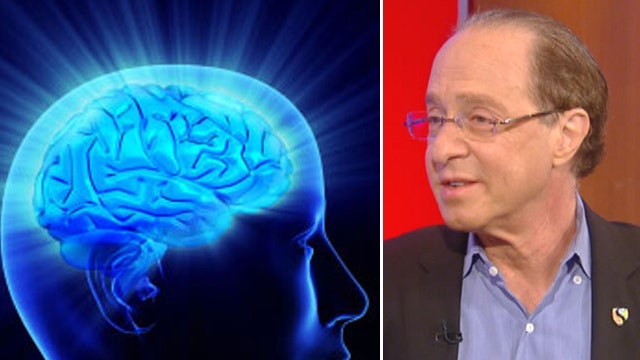
    Futurist, inventor Ray Kurzweil explores the future of human intelligence

  • Duration 7:45
  • Date

Clips

Also in this playlist...

After the Show Show

Auto-advance: ON

Auto-advance

Transcript

This transcript is automatically generated

After the show so now it's what's today Tuesday Tuesday December of forests already can believe it's written by one of our.

Guess who was on at the end of our broadcast -- to come back is fascinating guy.

-- -- -- He's yup ever -- -- both of starting a best seller it's called how to create a mind but you are even -- stuff your whole life gives you the guy.

Who has been able to tell us what our world is going to be like.

In the future.

Well I'd fashion my -- and in Venice some say young age and -- -- and things like speech recognition tech recognition.

Reading machines for the blind.

I realize actually timing was important -- again the study technology trends.

And I came up with a thesis called the law of accelerating returns which helped which basically says that.

The power of information technology grows exponentially doubles -- every year and that's that really multiplies.

Over time.

This little computers is actually several billion times more power -- -- -- That's why Smartphone has several billion times more powerful -- -- -- the computerize its student that's amazing and that's just one example.

Have slowly and it -- as you look toward the future.

The good thing about the machines because we've we've -- your way to make them smarter smarter and smaller and smaller is will.

Will be able had computers in our in our bodies.

-- if we've got some organ going haywire this nano bot can go to that part of the body or somehow impact how it operates.

Well that's right I mean we're using we're putting computers type people's bodies and brains are ready for serious medical conditions like parkinson's.

As they get really -- size of blood cells which will be the case -- 2030.

Will be able introduce amounts surgery -- -- go inside our bloodstream and juicy insides of -- blood cell right.

And I read these fascinating things about your predictions.

-- and by the way at age fourteen you -- software that ended up in the IBM computer and you have something to do with that computer that beat the jeopardy people.

I didn't work specifically on that but -- uses techniques that similar ones of work done.

Some of the techniques and there are techniques that pioneered in the eighty's and ninety's.

After -- -- in in 2030 besides having -- -- blood cell inside of our bodies just our kids by the way that this is the lives of they're going to be leaving.

What other offense.

Well aside from getting smaller more powerful they'll -- Getting -- this offer is getting more sophisticated Watson that won the jeopardy game is one example -- and talk to your computer with.

Google now is Syrian and answers questions.

Is another example the Google self driving cars are getting more intelligent than emulating.

Human ways of doing things by 2030 they'll be equal to human.

Performance.

And we're gonna actually use these as we do today to make ourselves smarter they'll ultimately go inside our brands.

And we'll connect our brain directly to the cloud just the way this is a gateway to -- use it essentially will connect.

A bit the digital world with.

You know the physical world and we then you -- telling us earlier.

That the cloud that we -- to you know compute with and ensure photographed with and stuff like that will actually become an extension of our brains.

Right Dominican argued it it is already we have the media right of with the devices such as sewing photographs is actually answers your questions that gives you access to all.

Human knowledge it already makes us smarter I felt the part of my brain went on strike during that -- -- so construction and I think.

And -- these ultimately we'll go inside our bodies and bring in some people have them inside there about remembrance today okay is this a good thing.

Fundamentally I think it's a good thing you technology has helped us.

Stumbled human lifespan in the last two centuries.

-- healthier and wealthier and we'll continue to do that but there are downsides of -- and fire.

Kept this warm but -- down our villages and these technologies are double edged swords.

But overall I think we get more benefit than harm that's actually -- complex discussion which people debate.

But I think it's very clear were better off and who seeks you out.

Freer now.

Me personally and it.

Well I I don't and that's what companies come to you and say what can you help us well I have relationship with comers like Google.

And I speak around the world -- of 67 speeches -- all continents.

And actually this growing awareness of these kinds of technological trends everywhere.

In the world and -- get a lot of reception from Abu Dhabi to South America.

Middle school children and in the midwest them and it has been to lots of different audiences -- when you look toward the future which you've spent your whole time thinking about.

What's future look like.

Well if we even in the near future we're going to be going into augmented reality things like Google glasse which.

-- of looking a little display which is like looking through a keyhole will have a whole visual.

Feel that view is will be on display in and be augmented saw a look at -- and -- They'll be a little pop up.

Giving me people's names -- so hit -- are you wearing glasses to see that or is here -- -- -- my eyes and I see real reality but I also haven't augmented and an eyewitness.

-- -- I'm trying to comfort him -- There's going to be a screen in front of a person.

It in his -- -- it'll be in your glasses little beam images on -- read this all CU but they'll also see a virtual pop up that tells me your background and helps guide -- Ogunleye who couldn't -- I -- Wikipedia is not the one that's Clinton what's on behind me from the ground because you know -- Steve's a stripper on Wikipedia and god knows what I am from day today.

So so who will put this information on about who you lock the information is not bad I mean we exits and all the time -- that terrible people -- Many seriously -- a -- would you would the person put their own.

Personal information on who they are so when people look at then suddenly it says okay -- Stanford University a group in Minnesota played the violin.

Well you have to be a -- news -- of these technologies but.

I mean the information is is fantastic you can access.

Information about anything sitting at dinner and question comes up and you can answer it.

You have to be.

-- -- like Google itself when you when you could do a search you look for things a whole bunch of different.

Selections off up to -- it's gonna become more intelligent Harmon right now since it's based on keywords with -- is actually gonna go into understanding what.

The content of those pages are.

These search engines will be able actually understand.

The meaning of the language the same way Watson.

You know did that Watson actually read we competed against knowledge it wasn't programmed with a lot of knowledge it's just so it actually understood still the natural language and in Wikipedia that -- -- -- so will technology be able to know what I'm thinking right now.

That's further out I mean who who where will start -- actually.

Listening to what you're saying into -- what -- reading what you're writing and be able to actually help guide you.

So you may have a suddenly a pop up that says our units to -- regular.

You're concerned about.

Vitamin B twelve and getting -- into the cells will hit twelve seconds ago there was a new research article just on that topic and and the so if you -- actually answer your questions before you think of the questions and help guide you reflect like intelligent assistant that really knows you it's fascinating stuff it if you -- -- read about it to get his new book.

New York Times best seller already how to create a mind the secret of human thought revealed.

-- at a real pleasure to have my pleasure thank you very -- saying thank you.

We'll see you tomorrow.