You're watching...
What would Milton Friedman do about 'fiscal cliff'?
Details
-
Description
Biographer of famed economist weighs in
- Duration 5:26
- Date Dec 6, 2012
You're watching...
Biographer of famed economist weighs in
Also in this playlist...
Auto-advance: ON
Auto-advanceThis transcript is automatically generated
Talking a lot about this Bill Clinton that clock is ticking down until the deadline for that admit all of these efforts to try to hammer out some sort of deal on Capitol Hill.
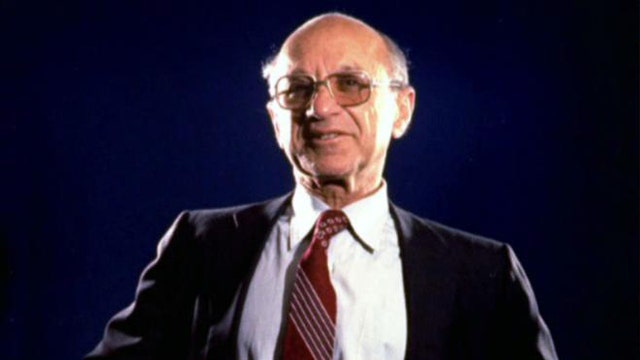
And while some Warren -- the dangers of going over of the -- And man known as one of the greatest twentieth century advocates for free market economy may have had a different take his name was Milton Friedman.
And he was well his his greatest concern.
I was really just government and too much have it -- isn't a clip from the 2006 documentary 1%.
The bottom would be -- put in the end and apple worse off.
What do harm not good but people don't pay those contacts is -- -- way to getting around.
When you're never going to be able to stop them from finding.
Ways to -- around.
-- about taxes there -- next guest has written extensively about Milton Friedman and we want to ask him.
It what would -- How many even sign is the author Milton Friedman and biography he's -- editor at the indispensable Milton Friedman and he joins us now so anyway I would look and think about all of this.
Terrific -- great to be with you I'm I'm sure that -- Milton Friedman we're here today -- -- go over the fiscal cliff.
Yeah I don't even president breaks.
It it's all always worthwhile to meet and have negotiations but at the end of the day he favored the least government spending possible.
And I believe that he would have said that's a course that.
Isn't going to be accomplished by raising taxes rather by raising taxes that'll provide funding for more government spending so.
Friedman definitely would have been in bid would have been in favor of the course that will result in the least government spending.
And Milton Friedman served -- -- an economic advisor for Ronald Reagan during the Reagan administration.
But I'm curious what he would think of either side's position right now Lanny what do you think -- take either side.
Why I think that he would definitely be on the side of the Republicans in congress who feel.
That the tax increases should not go forward.
In that there should be the maximum spending cuts possible I think that's not just true for the effect on the deficit but because the deficit.
Is being monetized.
At this point in time to quantitative easing it can result in greater inflation down the road.
So from both perspectives Friedman would've thought that this is not the time to raise taxes this is the time to cut government spending.
We don't want to have a larger government deficit.
And that this is the course that would lead to the greatest prosperity in the economy he would not have agreed that.
If we go over the fiscal cliff that that would have a negative impact on the economy.
He would say rather.
-- by bringing the deficit down by having the prospect of lower inflation in the future that'll be good for interest rates now would be good for the economy in the coming years so.
We need to go to Ed does American citizens -- that say let's -- Over the fiscal cliff I'm afraid of that I don't even I don't even want to entertain the possibilities of what that would look like well I.
I think that when it comes to issues such as the extension of unemployment benefits Social Security.
Medicare.
Friedman would have argued that it's the better course to cut spending in those areas now.
Rather than defer indefinitely and making real spending cuts.
The current agreement was hammered out in August of 2011.
What typically happens is is that spending cuts or promised in the future.
But they never materialized but taxes are raised anyway that's exactly what would happen under this circumstance.
Taxes would be raised.
Spending cuts would be promised in the future when that deadline is reached.
We wouldn't make the spending cuts so at this point in time what's really being talked about it's strictly a tax increase in Friedman would have -- that.
-- -- I don't need to tell you this there's certainly been critics have Milton -- out there and it made you kind of take -- -- -- together this is what they say.
There is a time in place for government there is -- time and place for government can serve the economy and that was.
Opposed to let Milton Friedman said but in general you know well.
What do you think he would make of that question today being the government is where it is is the -- that it is.
What role would appropriate role does government have.
In the economy at all.
Sure Freeman did not question that there's an appropriate role for government and society.
But in general he thought that the less government the better the lower taxes the better.
The less spending the better the less regulation the better and a stable monetary policy is the best way forward.
So those were the reforms for government that he would have advocated.
Those -- the reforms for government that he advocated throughout its.
Career earlier this deal and by the way and that that interviewed 2006 just before he passed away do you see anybody that's like him today that is.
-- thinker -- the way that Milton Friedman why's that may have an impact right now in some of our economic policies.
Well gosh having studied Milton Friedman for many years I would say he was truly one of a kind and there was only one.
What he truly was indispensable.
And there was really no one else like him so I think there -- many individuals who are doing good work but there was only one -- He's certainly had a personality shortly after you finish that question with the interviewer in that documentary he kicked him out of his office contestants -- -- what you are not with pocketing more about this.
Lady it's great to see today thank you so much for the time.
Think you -- speaking of government.