You're watching...

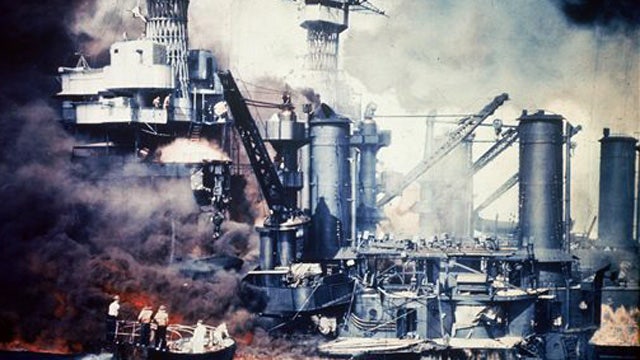
How Pearl Harbor attack changed America forever

Details

  • Description

    Nation pauses to mark 71st anniversary of Japanese assault that launched U.S. into WWII

  • Duration 4:21
  • Date

Clips

Also in this playlist...

Editor's Picks

Auto-advance: ON

Auto-advance

Transcript

This transcript is automatically generated

Is pleased this match against dive bombers while they're sneak attack on Pearl Harbor.

And it is evolving problem where these pictures right to every American can never happen again.

-- -- like sitting ducks in the Arizona score of other ships of all -- -- some.

2343.

American fighting men died in the blazing inferno.

-- shocking and devastating moment for all Americans.

Who were alive at that time.

V -- Ron -- and the emotion connected with Pearl Harbor to be attacked.

Our own home home soil 71 years ago today and it launched the United States into world war -- Thousands of people will gather today in Hawaii for memorial service at the side of the USS Arizona.

And they will -- -- that gets under way a couple of hours from now 7:55 AM was the moment.

That attack on that fateful day.

People across the country.

Remember Pearl Harbor today and we do so by being joined this morning by retired navy captain Chuck Nash.

Also a Fox News military analyst kept -- good morning good to have you here today good morning -- -- you know with all of these things you get further and further away from them and there are fewer and fewer people who were there and who remember.

The events of that day what do you think is so important for especially young people to understand.

About the significance of Pearl Harbor.

I think a lot of folks young folks today have gone through a similar thing with.

9/11.

-- was a galvanizing influence and it changed.

America forever.

December 7 was a sneak attack and the nation when.

That day that Sunday when people found out what was going on there was no Internet so news traveled a little bit slower I think than it does today.

But it still went to every every crevice of this country.

And the next day you had people lined up at recruiting stations they wanted to go avenge that attack.

So in a country that had seen war on the horizon with with that the Nazis invading Poland and Europe going into war.

The Americans could see war coming but it wasn't until we were literally stabbed.

By the Japanese that morning -- -- the anger and everything came out and and people just it galvanize the nation and and -- him.

-- forever yeah I'm -- my mom tell -- a story that.

Being a little girl and -- sitting down for I think it was hot chocolate or something at a diner with her mother and then suddenly she said you could feel.

All across the place -- something was very wrong and her mom grabbed her by the arm and you know they they went straight home.

And that realization.

You know that that that safety that that feeling of domestic security that.

You enjoyed and I think you're so right I think that for so many people today 9/11 have that same sort of really life altering.

Impact.

And as we've said they will be remembering this event today at Pearl Harbor of course -- -- also be honoring a man captain -- Ray Emery.

Who is 91 years old and has spent the better part of the last twenty years.

In an effort that has annoyed some people who are involved with the remembrances of Pearl Harbor.

But he has been dogged in it identifying.

More of the remains that were buried in a volcanic crater there.

You know how how important -- is admission that he was not -- he's -- today.

I think.

Really what this comes down to is if you send you were sons and daughters.

Into the military and they go out to defend.

That the whole thing about leave no one behind you want closure you want to know what happened to your loved one.

And so in the end that's why it's so important to identify remains to do just to bring closure to the families and when you think about.

All of those who were lost at sea or buried on beaches throughout the Pacific and everything.

And then these families never knowing what happened we're down to the point now Martha where.

And that the statistics vary in the numbers vary but of the sixteen million people who served in World War II.

They're only about a million and a half of those people left.

And they're dying at 680 -- day so our family like telling.

Yeah that's got to get closure -- have -- there kept Nash thank you so much of Iraq.