You're watching...

'Brain pacemaker' offers new Alzheimer's treatment

Details

  • Description

    Dr. David Samadi explains

  • Duration 4:01
  • Date

Clips

Also in this playlist...

America's News HQ

Auto-advance: ON

Auto-advance

Transcript

This transcript is automatically generated

A groundbreaking new medical procedure that could help fight alzheimer's disease it's essentially a pacemaker for your brain.

Doctors at Johns Hopkins University are the first to perform the surgery.

They're performed -- surgery so far the goal is to stimulate the brain much like pacemakers do for the heart.

Doctor David some body is a member of the Fox News medical eighteen.

And chief of the division of robotics at mount Sinai hospital he joins us right now from Steve UN in the newsroom -- -- this is really groundbreaking.

And somewhat encouraging of course for those who are suffering from alzheimer's tell us how it works please.

Kelly this could be major breakthrough in the field of Alzheimer if you recall years ago we reported very similar thing to the pacemaker that we use in the heart.

I look today these pacemakers are being used all the time in order to save.

People's lives from cardiac or -- your money -- at the end diseases of the heart so this can really returned -- time and change a whole field of outside her.

Did brain pacemaker -- he's really.

-- battery that we basically made too.

Holes we drill -- hole in the brain.

In this thought he can put wires around certain part of the brain.

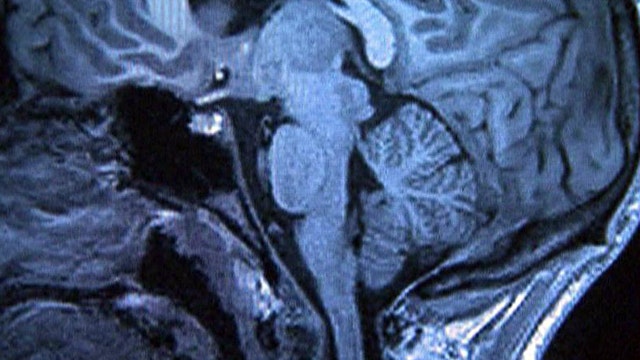
That's going to stimulate the called hippocampus and hippocampus is the area where memory is being restored.

This is where our short term memory and long term memory is stored and we can always -- -- recall.

By going back to that area so hippocampus is a very important part Alzheimer over time effects hippocampus and that's why the brain start to slow down.

The idea behind this Caylee is the fact that by doing this stimulation of the brain.

You would increase -- glucose metabolism and you being bringing more oxygen to the area.

And as a result the brain can work much better what's important is if this -- make it can slow down the process.

That of losing our brand and -- the short term memory etc.

it was slow down that the image and it can help millions -- of people that are affected by the.

That is exciting news indeed I understand that this is already been conducted.

For parkinson's patients and this is a similar process -- -- use it for the brain.

And then doctors are really encouraged by because the doctors at Johns Hopkins of actually seen it work for those with parkinson's.

You're looking at the science in a whole different -- level and were extremely excited as a physician and a surgeon.

I think this is a major breakthrough -- six of these procedures already have been performing Toronto this is the first one that's being done and John Hopkins.

We're excited about this this second case is actually.

It's scheduled in December.

Mind you as you mentioned about 70000.

Of these procedures have been done.

For parkinson's and there -- -- result of the clinical trials we see less tremor and really great outcome.

So I think this is exciting what's important is that they have a clinical trial going on as we speak there aren't -- recruiting about forty patients.

Toward divisions are going to get these batteries and pacemakers -- are going to be followed up.

And we'll see what the result is going to be.

That outcome of this trial should be out within a year and and and preliminary result.

That it should show that -- -- pace up this short term memory.

And slowing of the brain is going to be much less so this is very very exciting.

Field and the fact that it's been done solely to -- tells us that it's quite safe -- -- -- ago do we know at this juncture.

If it if it there if there's a certain stage of alzheimer's that you should actually treat this person with a pacemaker I'm so glad that you brought this up because for a late stages of Alzheimer.

This may not -- but certainly for very early stage of Alzheimer.

Iran -- these days of -- -- certainly would be a major treatment option -- so that's really wonder where they're recruiting the patient's doctor -- money always good to have you with us thank you sir thank you very -- have a great week.