You're watching...

EPA illegally regulating water as a pollutant?

Details

  • Description

    Virginia Attorney General Ken Cuccinelli explains

  • Duration 3:33
  • Date

Clips

Also in this playlist...

Latest News

Auto-advance: ON

Auto-advance

Transcript

This transcript is automatically generated

You know that water can be classified as a pollutants and -- the EPA thinks there's too much of -- in your neighborhood.

If you try to take away your home.

Latin and -- and then played grass.

Virginia attorney general Ken could -- filed a lawsuit in an effort to keep that from happening.

Earlier I talked to him about that -- the focus of this week's regulation nation.

Yeah yeah right outside Washington DC actually which is where we're -- argue the case in Alexandria.

And you know it's bad when our co plaintiff is a Democrat board of supervisors.

Very Democrat county Fairfax County here in Virginia our largest and and it's it's reached that level of severity that it would cost them several hundred million dollars just for one county.

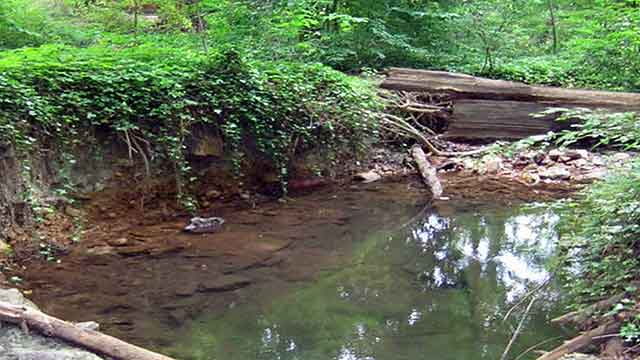
Tom and our Department of Transportation about seventy million dollars just to comply with the proposed storm water regulations for one creek.

One creek.

Packets in -- in Northern Virginia and they EPA itself concedes this is.

New way of regulating by addressing water but as I as you noted in your intro they're treating water like it's a pollutants.

As it was such as a way to get it sediment in the creek but.

This is never been done and there's a reason it's never been done because in our view it is -- legal and in the view of Fairfax County it is still legal and that's the level.

That we're fighting them on in this case we haven't even gotten down to whether this makes sense to achieve the goals they've set or not.

Our complain is they don't even have the authority.

To do this.

-- -- mentioned the millions of dollars it would cost the county the state Department of Transportation.

And this is an area outside of DC that is heavily populated heavily traveled what would it mean -- real world impact for the people who live in the area where the EPA is considering enforcing this action.

Well let's take the Virginia Department of Transportation.

We -- -- -- because of our roads and the runoff.

When it rains the water runs off the road.

And some of it goes into this creek.

Well obviously we can't stop the rain.

So we're gonna have to do something else to slow down the amount of water reduce the amount of water that's flowing into this creek.

And V dot doesn't own a lot of land there's not nothing but the roadway in the media and so -- what they're gonna have to do his things like.

Take people's houses.

Evict them.

-- the houses down and plant grass.

So the water doesn't flow.

It instead soaks -- to the earth and they're gonna have to do that across a fairly.

-- wide area should be able to reduce the amount of flow in high rain periods.

And that's a real world impact families are gonna lose there houses businesses could lose their business locations as well because V -- doesn't have.

Virtually any other alternatives.

To comply with this extraordinary legal overreach and less of course you could find a way to control Rainwater.

As it falls from yes well.

That's right we -- we didn't try to argue they've under rule nineteen in the federal rules that they have to include god is -- necessary party.

But I don't see that happen.

And I'm not sure where he would come down on the EPA we understand -- -- -- necessary.

But in this days I think to most folks it sounds a bit outrageous we'll see what the court decides pleased that keep us updated.

If you will as a case -- -- Absolutely.

And.