You're watching...

How will right-to-work legislation impact MI jobs?

Details

  • Description

    Rep. Sander Levin speaks out

  • Duration 5:05
  • Date

Clips

Also in this playlist...

Latest News

Auto-advance: ON

Auto-advance

Transcript

This transcript is automatically generated

Well we're filings and breaking developments in Michigan or governor Rick Snyder signed two bills into law last night making.

Michigan to 24 at the right to work state the laws essentially gang unions.

For requiring workers to pay -- -- when you're hired you'd pay the equivalent of those days.

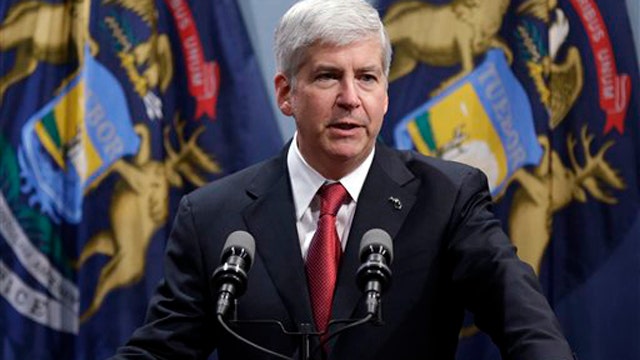
Here's Governor Snyder from a news conference last night.

I view this as an opportunity.

To stand up for -- workers to be pro worker.

To really say here's an opportunity to give workers choice the freedom to choose.

Who they associate -- whether they paid financial.

Dollars to organizations that they may not believe are serving their best interest.

I'm hopefully those organizations are and they see value -- they sign up and pay those dollars but if they don't they're not forced into that position.

Joining me now Karstens an eleven and Democrat from Michigan his -- of their ranking member of the house ways.

And means committee next have you -- but that's not to be with what a pleasure.

US had said that if the governor made this decision which she has made.

That this would plunge in Michigan into analyst controversy and strife what do you think that.

Because it divides workers among themselves and it really divides.

Workers from management if you -- the Big -- Do they want to -- to work so called.

-- -- would be -- because we have evolved in Michigan some amicable labor management relations.

And workers have a voice.

It has to be done by a maturity.

And that they now have a voice in the workplace and management.

The Big Three and others think it's good for workers to have -- Voice and it's my understanding that in 1965 when you are working in the state government you -- part developing one of the first major allies that.

Talk about employment and labor relations in this country.

So that's the interesting for -- to look back on that.

And and see where this -- is now what would -- make it the transition.

-- in the sixties people in the public sector didn't have a voice.

They could not be represented.

And Wayne State when I call them and ask could not to you recognize you union.

He said no because -- king can do no wrong essentially the employer called the tune.

Entirely.

Too we should that have let workers have a voice if a majority wants one.

And I worked for this governor Romney has set down initially -- state senator one on one and we worked out the public employee relations that.

And now you have a Republican governor.

Who wish essentially.

Turned his fact.

And what -- Republican governor and I worked out and others.

Many decades it.

You know the argument as well for our whining this right to work a -- -- say that the economy has changed you look at the -- Michigan -- very high unemployment.

This city of Detroit right now is -- 19% unemployment.

And so when you look at those arguments you look at right to work states that overall have lower unemployment rates then -- Other states.

What do you think about potentially this being -- move for the positive maybe this is something that opens up the states more jobs.

There's no evidence that happens.

-- 67%.

That wages have been more or less stagnant.

And if workers don't have a voice.

They can't better their own condition.

You know we've had a middle class that -- really in terms of income been stagnant.

In 2010.

90% of the income growth went to the top 1%.

-- -- 1% needs to be talking.

To -- 99%.

And representation.

Gives people a chance to have a voice.

And essentially what it isn't right to work.

People don't have to join a union they don't have to pay union dues if a majority selects a representative.

Essentially everybody needs to pay the cost of that representation.

I -- -- -- question other than in this misty initially thinks you mentioned you worked with the Republican governor you've worked across CI many times in your career.

Can you give the American people -- status update about what's happening with these -- so -- negotiations do you see that coming together both sides.

I hope so but there's a cliff in this country in terms of how we approach things.

The president -- applying.

The very wealthy no longer -- get a tax break middle class taxpayers should continue to get a lower tax than they otherwise would.

The Republicans if I might say so simply have to listen to the election ourselves.

The president was clear we -- candidates to be clear about their positions.

The president was a -- clear.

That the tax rates for high income people who should return to the Clinton there.

To -- follow.

The Republican should list.

-- a pleasure having -- that we look -- -- come back talk just a little bit about spending to at the national level.

He could accumulation -- -- -- thank you for the time to.