You're watching...

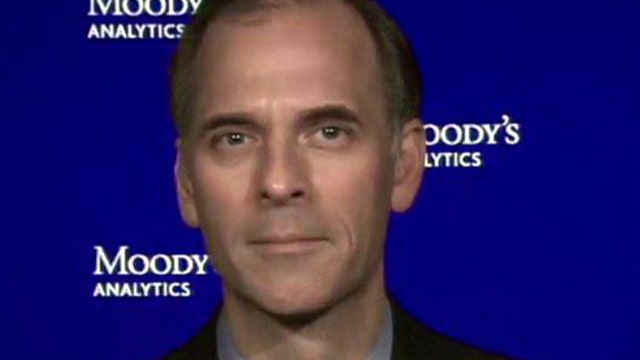
Calculating the real economic impact of the 'fiscal cliff'

Details

  • Description

    Chief economist of Moody's Mark Zandi weighs in

  • Duration 3:59
  • Date

Clips

Also in this playlist...

Editor's Picks

Auto-advance: ON

Auto-advance

Transcript

This transcript is automatically generated

Now -- now from one of the most well respected in most well known economist in the country marks and he's joining us and chief economist and co-founder.

Moody's economy dot com and mark.

It it seems like this is time to talk about some of these these big items in the economy.

But when we look at if fiscal -- negotiations.

It seems disproportionate.

You small negotiations for a very big problem.

It tell us about that is a disproportionate to anything and -- right now going to affect the fate of this economy.

Yeah I'm more optimistic -- you know I do think that when it's all said and done.

After all the back and forth the political brinkmanship.

We'll probably get a deal that will address long term our long term deficits.

Scaled back to two naturally over ten years.

And while that's not what we need at the end of the day to solve all our fiscal problems is a good step forward and I think it's good enough to keep financial markets happy.

In the recovery moving forward so yeah it doesn't feel like we're gonna get a deal that's going to be very substantive but.

-- at the end of this process I'm still hopeful that we will.

We'll take it will take the optimism -- absolutely especially this that here you know we need we need that hope that we're gonna get beat a better situation and we are.

I'm curious what you think about what's best for the American people because we talk about what's best politically for both parties but what's really best -- -- should be in this.

That would be best serving for the public.

Sure three things first we have to scale back the tax increases of some people to see their tax rates rise of people in the high income groups -- For most Americans we have to ensure that there -- tax rates do not rise.

And second we need to raise the treasury debt ceiling at least for a year or be nice could do for longer but it.

You know that's creating a lot of brinkmanship and making business people very nervous that we have to.

We have to raise that and the third thing is we need that to two and a trillion dollar in ten year deficit reduction which means government spending cuts to the entitlement programs.

Primarily also some tax revenue increases if policy makers can do those three things then I think will be.

In OK shape again we're not gonna solve all our problems ad infinitum into the future but.

That would be sufficient that be enough to keep stock prices moving upward in an economy moving follow.

Let's talk about the -- ten year part of all of this because you mentioned.

Earlier and that what we wanna see the plan for the next ten years.

But some people look at that and think OK they're gonna get a deal they're gonna say they're gonna decent thing over the next ten years but there's no guarantees they'll do it and there's always something unexpected that happens in the country mark whether it's natural disaster.

War.

Anything it a connoisseur sort of like weather forecast is you're out weigh in -- that you have to account for the right and expected so what about this this ten year.

Time frameworks -- even take that.

Well I think some of the spending cuts were talking about here if implemented.

Would be quite substantive and in it if both Republicans and Democrats greeted them I think they will be -- so for example.

-- changing the Consumer Price Index that's used for.

Adjusting -- secured the success prepayments -- that.

Isn't that adopted then I think that it will mean substantive -- a deficit reduction in the future and of course the tax increases.

That'll stick as well so you know I think the things that we're talking about here that that both Republicans and Democrats are considering.

If they actually greeted them then will be designed in a way that we'll actually see some see them being implemented.

They actually agree on -- right that's that that's the main point -- read this book paying the price ending the Great Recession and beginning a new American century.

Quick thought from you about -- when -- thirteen looks like.

But -- you know not too bad it is -- -- -- -- these fiscal issues eight I think -- be in OK shape and by this time next year.

I think will be often running because the housing market is making a big turn and that'll provide a lot of Jews to the economy so that we we just need a little bit of rockets and their policy making will be OK okay.

All those things -- take the not too bad I look forward to talking to you next year at the same time to see if the economy's really taken off because that'll be something.

We can all authority mark great to see you happy holidays thank you thank you.

Here's a measure.