You're watching...
Childhood obesity rate dips for first time in decades
Details
-
Description
Doctors encouraged by modest decrease
- Duration 3:13
- Date Dec 28, 2012
You're watching...
Doctors encouraged by modest decrease
Also in this playlist...
Auto-advance: ON
Auto-advanceThis transcript is automatically generated
-- bright spot in the battle against childhood obesity a new study suggests obesity rates among young children in low income homes have dipped.
For the first time in three decades.
According to the Centers for Disease Control and Prevention the rate began dropping eight or nine years ago and by 2010 had fallen below 15%.
And while the drop was comparatively small researchers say it's the first national study to show the obesity rate may be on the decline.
After tripling.
Over the last thirty years -- -- now primary care physician doctor Keri Peterson doctor good to see you or are you encouraged by the.
This I am encouraged even though it's only a modest decrease at least for taking a turn in the right direction.
And it was a very very large study looked at 27 million preschoolers between ages.
Two and four and what they found a perfect out over time period between 1988.
And 2010.
Initially we saw about a 13% obesity rate.
And that peaked in 2003 at fifteen point 2% but in 2010 when the study was concluded.
We have turned the corner and now we're down to fourteen point 9% so it is an exciting turnaround.
I mean it is -- and I hate to bring the mood in the room down here but it just seems kinda like a drop in the bucket because the problem is just so bad across the country.
I I do agree with you is such a modest decrease.
And when you do look at obesity numbers over the past thirty years just in 2008.
Children between ages six and 1113.
Of them were overweight or were obese.
But I think the important thing is is that there is attention being drawn to the problem.
And that because of that as a rising awareness.
In the part of parents and of communities and of child care centers.
That physical activity is much more important for children.
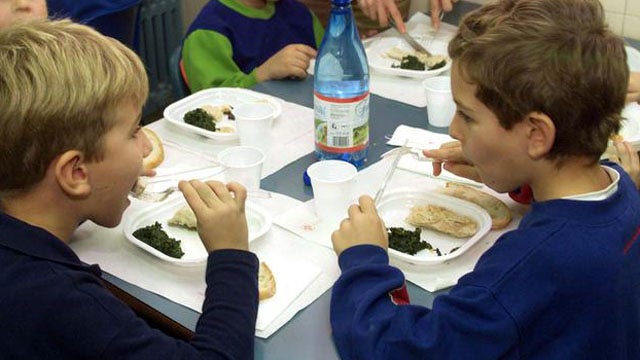
And that eating patterns need to change including what served in schools for lunch for example.
In schools for lunch and you know you look at these fast food places doctor and I mean come on you can get 2000 calories now for three bucks.
It's just it's so easily accessible and the less money you have the worst the food get -- mean.
What's the biggest problem with this.
With the biggest problem with children I think -- with low income families it's the cost of healthy food.
Organic foods fruits and vegetables are expensive and -- food from a supermarket that is or fast food restaurant.
Or even through this food stamp program are not necessarily the most you know healthy choices.
Which is why states and communities are now targeting child care centers and there's even and movement and an impetus for the food stamp program.
To not only focus on food quantity but also on food quality.
Because that access to healthy foods is a big problem.
And I got to go over the body you know what I see in these kids that are that are carrying too much weight is there there -- -- levels doctor just so -- Well that's the problem the short term problem with children a self esteem there is a state -- psychologically can impact them.
Not to mention it increases their risk for high blood pressure high cholesterol and they're more likely to be obese adults with all the problems that come with that.
Yeah -- Keri Peterson doctor thank you thank you Trace.
While.