You're watching...

America's left turn in 2012

Details

  • Description

    A look back at the year in politics from the elections to the Supreme Court's landmark health care decision

  • Duration 6:26
  • Date

Clips

Also in this playlist...

Journal Editorial Report

Auto-advance: ON

Auto-advance

Transcript

This transcript is automatically generated

This special edition of The Journal Editorial Report.

-- as we look back on the year that was on the challenges facing us in 2013 first to our big stories of 2012.

And America's left -- from the supreme court's landmark health care decision to the reelection of president Barack Obama.

Politics on the national level headed and I'm decidedly liberal direction.

So what happened and what does it mean for the country.

Going forward joining the panel this week Wall Street Journal columnist and deputy editor Dan -- -- political diary editor Jason Riley.

And Washington columnist Kim -- -- so -- we've been.

Like to say for a long time we've been in a center right country.

If you look at the last two presidential elections that doesn't seem to be the case are we living now in that new progressive era.

In terms of the presidency.

I think we are Paul I'm not so sure about the country but Barack Obama I think -- the most center laughed even left wing presidents since the Great Depression.

And I think what Barack Obama has in mind to do is indeed to redistribute -- come from the top -- word.

Not to cut spending but to increase spending its explicit from a historic 20% of GDP to about 25% of GDP.

And rather the cut spending raise taxes as necessary to support that spending.

And I would say that isn't -- essentially the French model the question is whether that model can produce enough growth.

To support jobs -- in the economy -- Question Jason taxes are going up we know that spending going up for sure even before the health care law kicks again.

So we are moving in that direction -- in the entitlement state of right not reforming it but actually expanding.

And what happen this year was the Supreme Court helping -- along you have the justices.

Essentially rewrite legislation.

Changing the -- tax the congress passed in order to court to declare Obama -- constitutional which is a little scary that that.

The highest justices in the land would would take that sort of activist role and you mentioned France -- and that's what's really scary but the backdrop of this whole presidential election year was your.

We know where this path leads all this turmoil these huge welfare states and how unsustainable they -- in the low productivity in the high unemployment comes along with them.

That was the backdrop of our presidential campaign well okay and the voters voted and they said -- we're gonna keep moving in that direction -- I mean how well.

-- -- What -- you -- think the electorate is here is it really behind.

The kind of choices.

That Jason just.

Suggested.

-- might be.

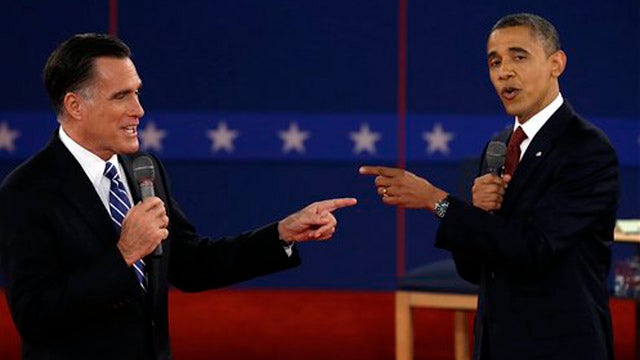
Barack Obama won the selection -- by very effectively making this a referendum about his opponent Mitt Romney.

So if you -- out in US most Americans.

Do you think Barack Obama did a great job in his first term.

Do you want significantly higher taxes do you want the government to do nothing about spending are you happy with obamacare most would say no.

But -- the -- the choice was between a president who said things are great but I'm gonna still keep trying to make them better and a guy who he painted as not having a plan.

And not identifying with the average wants and needs of most middle class Americans and -- and people decided to stick with the double that they -- rather than the one they didn't.

So the election the Republican defeat was big but it was an overwhelming in the sense of a repudiation.

In your view cam of the Republican platform -- of their agenda.

-- and I think the reason look at this country did have the opportunity in this election to once again hand.

Completely controlled government to Democrats everyone in the house was up for reelection -- yet they continued to give.

Republicans -- majority there they like divided government and I think you've got to look to what the number of states and -- elected to the very.

Conservative governors who are are doing the exact opposite of what Barack Obama is doing the federal level -- there -- There are some real implications consequences to the direction of policy direction the president -- one of which is there's going to be a lot less money for defense of the American ability to project power abroad is -- Decline and may be rapidly.

The key question of course economic growth can we get out of this 1% to two and a half percent -- we've been in for four years now.

And break out of that if we can't the kind of commitments the government may government is making are just going to be an affordable.

You know I think I've previously cited the Nobel economist and Nobel laureate Robert Lucas University of Chicago -- looked at this closely and said why are we not getting economic growth and United States coming and he cited Europe indeed which in the 1970s.

Fell off its growth path around 3% after World War II.

And he concluded it was because as Jason was just suggesting.

The welfare commitments they have made it was unsustainable and their growth rate dropped permanently and Lucas raised the question.

Where the United States itself was on this lower long term growth -- that's the big question.

So.

Jason what's where where do we go from here and particularly if you are conservative.

What are your what what word to see that come back again -- -- begin and somehow accommodating the middle.

And and saying look it's a progressive year we've got to be a little less aggressive progressive a little more efficient in terms of administration or -- you put bold colors out there are some alternative.

I think it starts with the GOP expanding its current coalition and I think.

That Hispanic voters are one way to go I mean you have to remember just eight years ago.

44%.

Of Hispanics voted for the Republican presidential candidate for years ago it was 31%.

This year it was 27%.

This is a swing voting bloc.

And Republicans need to go after it.

And you know Paul I consider.

The recognition of a problem to be progress in and of itself but I didn't think that she's okay.

It's finally got -- reach some time it's come to grips -- this demographic reality.

Yeah I think so get out -- what about this idea.

Do you go to the middle or do you fly with bold colors.

Well I don't I think date it it'll be hard to go on entirely to the middle because I think.

The electorate you know the ones who did not vote for broke Barack Obama.

Voted against this vision and voted against a very strongly and I think for Republicans would put that at risk if they went too far to the middle.

OK when we come.