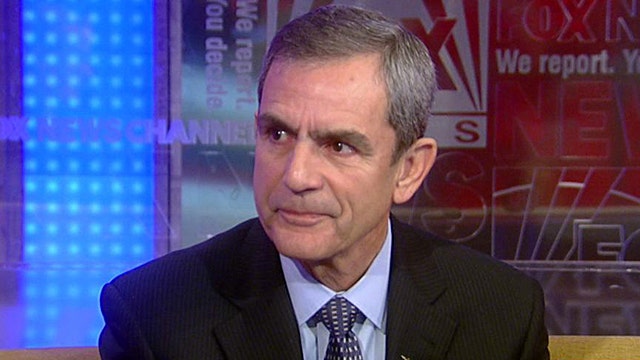
You're watching...

Leading with honor

Details

  • Description

    Former Vietnam POW shares leadership lessons

  • Duration 3:55
  • Date

Clips

Also in this playlist...

Fox & Friends

Auto-advance: ON

Auto-advance

Transcript

This transcript is automatically generated

Second 1967.

Colonel Lee Ellis was an air force fighter pilot who wish plane was shot down.

Over Vietnam held -- -- as a Prisoner of War for over five years.

At the Hanoi Hilton in some.

Cases he says the principles of leadership he experienced during a difficult time.

Helped him to not only survive the experience but made him a better leader he's written.

About those life lessons in a brand new book called leading with honor leadership lessons from the Hanoi Hilton.

And the colonel joins us live weren't -- yeah they did to be with you in forty years ago.

I could never imagine being here let alone defective.

Those lessons would be so relevant today.

Yet in fact -- let's talk a little bit about the your circumstances use -- because I I read your book that you were at times incarcerated right extort two the next cell over was John McCain.

You were with him at the Hanoi Hilton for awhile but we're we're really -- she said work was -- -- leadership structure inside the POW camp.

Absolutely we always had.

-- senior ranking officer that's the military way so we we check native Brian identify the senior ranking officer.

And that person had a lead in some very difficult circumstance no Kadant if it had to be -- in yet you say that some of -- One of the leaders was optimistic the other was so little selling still telling.

Would be a good way to put it I would say he was optimistic but.

But not -- so much as the other and so there was a little bit of attention there.

But on the other hand we needed votes we had to believe this Sunday we're gonna walk out of there.

At the same time we had a the Stockdale paradox confront the brutal realities of where we work well it's talk -- a little bit about some of the lessons you learned inside that are applicable to all of us for so you gotta know yourself.

Yes I think that's fundamental -- for me and I knew my passion was flying and aviation.

I knew my purpose is a -- -- person I knew my personality I'm adventurous take charge person.

It was a great time for self reflection as a leadership coach.

You need to leadership development always starts -- self awareness -- so you have to know yourself.

And speaking to yourself.

You've got a person old.

Goals and standards and morals and you've got to guard your character.

Guard your character so important we can all assume we have good character.

But the reality is the temptations -- so we have to refresh ourselves on what our commitments really are.

And then we need that support team around us that can help us.

And remind so what we're committed to and hold us accountable.

When you sit in the Hanoi Hilton you have a lot of fears that you say confront your doubts and fears as well and that's one of the most important things to you yesterday us.

Fear we'll take you out just look at Penn State.

That was all about fear of the problems there with the administration.

They were afraid of what might happen if they did the right thing.

I say -- into the pain of your fear to do what you know is right do your duty do you responsible whatever your duty is go do it.

Regardless of your -- Sometimes bad things happen to good people and you've got to be resilient you've got to be able to bounce back.

Bouncing back -- sole -- and we hear that.

And we see it every day we saw just was one of our senators on things from Illinois then bounced back and walking yes walking up the steps of the capitol.

I think -- you realize that.

What you're committed to know what you wanna be you get a plan he had a plan you set your goals and you just start walking your way back into.

Where you -- today and bouncing back and the POW MIA.

Wives and families really had to bounce back you know we had a tough but we knew we were okay they didn't know about us and they had -- -- and that support team really helped them.

Well it's it's really good -- coming from somebody who lived it for five and it appears colonel we think -- -- referred to thank you Friday day night that he -- thank you very much for your service.