You're watching...

What impact will women in combat have on US military?

Details

  • Description

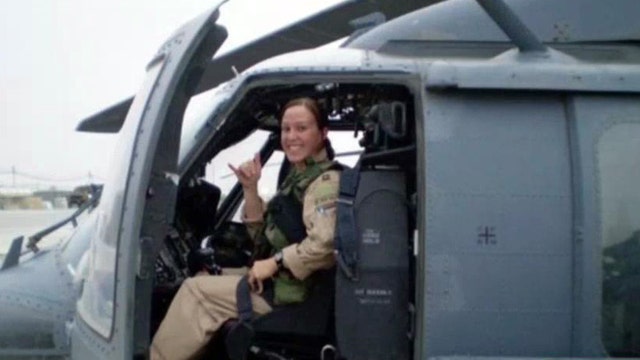
    Reaction from Major Mary Jennings Hegar

  • Duration 4:54
  • Date

Clips

Also in this playlist...

America's News HQ

Auto-advance: ON

Auto-advance

Transcript

This transcript is automatically generated

There's a big difference between being in harm's way women are ambushed as part of units they certainly receive mourners they have YAD attacks.

Being -- -- direct offensive combat operation day in and day out it's very different then being in harm's way.

That's or -- general Jack Keane who disagrees.

The Defense Secretary Leon Panetta's decision this week to lift the ban on women in combat.

But one air force major who is all for it is Mary getting paid -- she was one of four women.

Who sued the federal government to allow -- -- and she's joining us now with her reaction to the latest news welcome it's great to have you here today.

Thank you it's great to be here -- -- before we start I want to -- our audience know that you are decorated air force veteran.

Who received a purple heart for injuries you sustain on a medevac mission in Afghanistan.

A -- filed suit with others over the military policy to bar women from combat duty and now the bands being lifted what impact will this have.

On the armed services.

Well the impact is huge and I can talk all -- about it but the main the main impacts -- -- gonna have our.

Obviously on recruiting there's allow a number of well qualified and competent and intelligent women who walk away from -- offices when they find out they can't do the job they wanna do.

Talent drain we're losing a lot of really qualified and experienced.

-- enlisted and officers.

Because they realize they don't have much of -- future because despite the fact that they were in combat and did the same job this certain men.

They were holding the same job title so they're not gonna be looked at fairly for promotion so a lot of those women left.

There's going to be a huge impact -- and that.

The culture as it is right now so the women who are in combat right now.

Hopefully gradually this lifting this policy is gonna make -- a little easier for them because it stops sending the message to the troops on the battlefield.

That women are inferior and for some reason if they find themselves in combat it's an accident -- And -- there what do you say to those critics who -- this decision a misguided social experiment that women are not really strong enough physically.

To participate in direct combat.

I would say that there are a lot of things that throughout history where we've taken steps for progress.

That have been called misguided social experiments that looking back -- -- that -- obviously the right things to do you.

I'm not saying it's going to be easy and I'm not saying it should be implemented immediately.

But it's also not going to be as hard as some people are saying of course there's the question of you want to be.

Putting the most you know that that the strong and that -- and the people who are combat ready into combat.

We're not asking for anything less than that we're not asking for guaranteed spots were asking for the opportunity to compete.

But there are big concerns though from some who say that women are more vulnerable to sexual assaults if they're captured on the battlefield.

You know if they're captured on the battlefield anybody captured in becoming a Prisoner of War is going be experiencing.

Horrific conditions are eight men are also -- in captivity.

And win in you know I received as significant amount of survival training survival evasion resistance escape.

We understand the risks we understand that were given tools as much as any human being can be.

To try to deal with it -- you know it it it's going to be difficult if you become a Prisoner of War but the women -- make it through these training courses and have -- to -- TU.

-- serve their country and the way that they feel in their heart is the way they're supposed to be serving their country.

-- -- the except those risks and you know -- we just have to continue doing the training and and understand that.

It's it's difficult to see any American in that situation.

And really quickly though isn't it true that sexual assaults are -- problem within the military's own ranks -- defense department's reporting that 6000 cases have been reported.

In the last three years alone.

-- -- huge problem.

It's a huge problem everywhere but it's also -- big problem in the military.

And there are an increase in numbers and I I haven't looked at all of the studies that some of the studies that I've looked that and and through my own experience I had found that this is true.

There is an increasing number.

Partly because there is emphasis on reporting before it was not encouraged to report you would.

Face you know it had problems with the new unit because you're kind of -- like cattle tailor something if you -- and now it's really encouraged to report we have.

People in positions that are specifically there to advise victims.

On top of that it might be a bigger problem in the military because the military culture was furthering this view of women as weaker and women as victims of women as.

You know that that that increases the culture of women as objects and it inferior which is really more what sexual assault is about it's about dominance and it's about.

You know showing someone that you're superior to them.

Summit when -- change the culture.

And address the behavior from a leadership and discipline perspective and I think that'll that'll get a lot better well our hats off to you friendly thank you for your service a major hit -- thank you so much for joining us with your insights.

Thank you so much for having me.