You're watching...
What went wrong in Egypt after the 'Arab Spring'?
Details
-
Description
Mideast analyst Walid Phares weighs in
- Duration 3:12
- Date Jan 27, 2013
You're watching...
Mideast analyst Walid Phares weighs in
Also in this playlist...
Auto-advance: ON
Auto-advanceThis transcript is automatically generated
Carrying -- other news it's been two years since the uprising known as the Arab Spring led to the ouster of former President Hosni Mubarak.
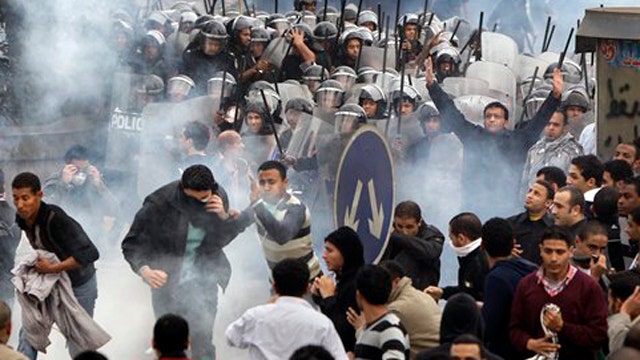
And this week the streets of Egypt have been filled with protesters upset over decisions that are being implemented by their newly minted government.
And on this anniversary images of more violent protests -- have egyptians on edge.
In Cairo for example more than a dozen people have been killed the protesters are outrage over court verdict sentencing 21 people to death for soccer riots.
That killed seven -- fans.
This is just the latest in a series of challenges confronting that nation.
And joining us now Fox News Middle East analyst Walid Ferris welcome -- to have you here -- -- -- this is the anniversary of the Arab Spring and as we take a look at what's going on many egyptians.
Are wondering what went wrong.
Major options are on the streets Omaha millions of them over the past 48 hours doesn't have been killed in kind of an old plants -- in on the many cities.
Phyllis -- leading those masses now on the same wave.
That did the spring indeed be the Arab Spring back two years ago what has happened is that the most -- -- -- will form the cabinet to Morse who has -- -- -- -- president.
I'm now taking you to become another authoritarian regime so this is prompt and prompting a new revolution.
And many people had hoped that the military was going to be.
Of the of the body that was going to lead some to feel that if things are calm that was gonna bring more of us stability -- -- -- But now we're hearing that the Muslim Brotherhood has great influence over the military is well well yes well people don't understand in the west that things have changed in Egypt in the -- -- had Mubarak and the -- -- Both pro Weston.
Both authoritarian but they -- one policy.
Now the the most about it -- in charge of the cabinet of the government what they have done over the past year at least.
-- -- change -- senior commanders of the ministry so they're not independent anymore they cannot take an action and if they do the United States and the -- would be against them.
So those who can effect a change are basically the people and the youth women minorities and civil society so what can the US do -- this -- it's very important to the United States.
Where you work and dialogue between mr.
-- -- and hit most of by the government.
And the opposition we've done it everywhere evident in Burma -- -- in many other places why we not.
Recognizing there's a civil society uprising what don't we invite the leaders of the civil -- -- uprising and -- -- Morsi.
-- the United States or elsewhere and -- between both the -- -- that's not happening.
Because I think the deal -- on restriction has a big bet on the most and by the look for the gospel to -- -- -- even before that.
That they feel the most motherhood are the -- representative of the Arab Spring which is not the case and now we see on the streets of Cairo.
That the Arab Spring is much wider -- the islamists who have civil society that secular women minorities as I said do you expect to see any type of stability in the next few months.
You know if we tried to do projection and look at the fourth of on the ground look at what we are trying to do or not to do it is it is sad to say that we project more of the same as long as mr.
-- an Islamist.
Have not understood that Egypt needs a change in -- -- -- liberal democracy not an Islamist states.
Please -- thank you so much for joining us that their insights thank you have you here today.