This transcript is automatically generated
-- -- -- -- -- -- -- -- In vitro fertilization or IVF has been performed since the 1980s.
Every year doctors have learned so much and are able to give families more choices.
But my guest today says the best is yet to come joining me now to tell us about the future of IVF has got to Jamie -- full.
He's the program director for the NYU fertility center in New York City.
Thank you for coming -- -- morning and not only.
The director but considered by many as one of the best IVF doctors in the world that.
Now.
In the simplest -- tells how traditional IVF works.
Well.
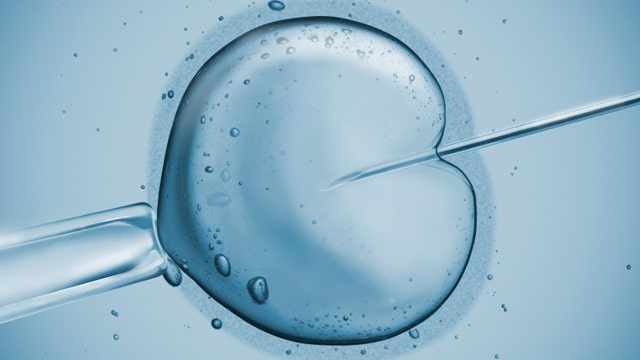
It works by stimulating a woman's -- to make a number of -- That are then surgically you recovered in a relatively simple office procedure.
The eggs are fertilized the embryos grow in the lab.
And then our job is to select the ones that are most likely to make a healthy pregnancy and that's where the problem has always been finding that.
One good embryos -- the huge challenge and the side effects of IVF are are the problem.
Putting back more embryos you get multiple pregnancies causes problems preterm deliveries and and so that's that that's really.
That the issue how do we find the one best -- -- -- we do it safely as sort of and so on average let's -- on the traditional IVF technology what is the average success rate.
Well it's highly age dependent so for instance a thirty year old woman in our program to look at nine years of data.
It is about a 58% baby rate from one attempt at idea of where is -- forty that numbers 27% half.
Right in every two years after forty it drops in half.
And that's pretty much over 45 doesn't work very well.
And and that's all predicated because of the agent of the -- -- -- an egg and the embryo that results which is generally chromosome we have normal and doesn't make a pregnancy although it looks good under a microscope.
And you would think that's the area that's gonna make someone pregnant and it doesn't work that way.
Does the -- -- the sperm matter the age of the sperm has an impact but not like the age -- -- -- so it's very minimal effect but there is an effect.
Now you always you know you always pushing the envelope further and further -- this way since the beginning you probably one of the best site -- doctors in the planet.
Tell me about the new approach they've been working on so.
We've always known embryo selection -- that issue and we've known that chromosomes -- problem you've known that but I mean you tell your -- as they get -- the -- of Down syndrome goes up with age.
Well it's happening with all the chromosomes Down syndrome -- just comes -- -- one.
And and in IDF -- we look at embryos they look beautiful most of them don't make babies the question is why and why in older woman to fewer of those embryos make babies so.
You know fast forward to -- couple years ago now there's -- technology contest in the embryo.
All the chromosomes.
And you can test cells that become placenta you get more than one cell.
You can test the true effect there which will become placenta freeze that every get the results find out about which embryos normal which embryos abnormal which chromosomes are missing.
And then only transfer.
One embryo at a time that's -- only normal and guess what you find you make Singleton pregnancies.
And the 2% of topic Chris goes down to zero.
The miscarriage rate dropped some 3040% to 8%.
And you're making sick you're making Singleton pregnancies that deliver a term.
More -- more likely to deliver a term because you're not putting him back in the same cycle that you stimulated the patient.
Which is part of the hazard and you're not making the multiple so much better outcomes lower miscarriage rates and what you find in a lot of patients all the embryos or abnormal and that was a failed cycle that was a cycle that was not gonna work but we know why.
And the patients on beating yourself up wondering what -- -- -- was exposed to that made the cycle fail right.
So but let let's go over that again goes I think this is very important so basically the traditional light -- methodology but you you're allowing the embryo.
To grow a little bit bigger.
And then you're extracting -- -- or to.
From that embryo.
And then doing almost -- genetics almost like a complete chromosomal analysis exactly because in the old days we used to do PGB.
And you were looking at only fresh five -- accept that reminds -- -- well -- and -- -- So now would this you have a bigger compliment.
And then also once she know that the chromosomes are normal.
Then that also that pregnancies a little bit bigger right in the -- how many days wells posts.
So these are blastocyst these are five days post egg retrieval we used to do IVF -- to transfer the -- on day two.
Then it went today three week.
And now now we're at day five and would we learned a day three.
Twice as many embryos are chromosome we have -- normal as they -- is just going to.
But it's still a large percentage of the -- are chromosome -- the -- and older the patient.
More are so a thirty year old woman 60% of those embryos that blesses -- -- -- normally it's 40% are.
-- age over age 41.
95% of those embryos are chromosomal -- normal and that's what we're putting back blindly and you have you you have you have published this data already right it's just been recently published where we showed.
That if you.
Did IDF this way selected embryos that were chromosomal in normal.
And put back a single chromosome -- normal embryo you could in that patient get the same -- -- -- As if you were doing egg donor of the young -- and ends because chromosomal abnormalities.
Is the cause -- -- failure.
You can find the embryo that's -- -- normal that you can't do and every patient.
But if you can you give a really good chance for the good healthy outcome now do you think that this is gonna become the standard moving forward.
Well I think obstacle for it to become the standards it adds more cost of authority costly procedure.
But actually when you include all the cost of taking care of the babies and -- -- -- cost.
You get rid of all the multiples you'd be lower than this character Rachel medically you have no -- topics you have deliveries that occur closer to term with bigger babies.
All of a sudden it becomes cost effective and I think once insurance companies realize that they're gonna want this they're gonna pay for it because it's gonna benefit them in the long run it.
And -- in the patient's pain on how many patient is you know I I have so many patients that go through 123.
IVF cycles in many sensors that really offer them very little choices.
Not only talking about they still have to pay for every single cycle salute the the amount of money that they have to -- this astronomical.
But on top -- that is the emotional you know the emotional defeat.
That they get every time they lose -- IVF cycle well and then on top of that knowing why the cycle didn't work right IE all the embryos were abnormal.
Is therapeutic for a patient to help them make decisions about.
To keep doing this -- -- do something different -- -- do a donor to adopt or do I feel like it did everything I could and now I can move on with my life and not.
And not feel like it's my fault and so it's -- that there's a lot of benefits to and I.
Well I think that this is amazing in you know this is a -- -- -- a little familiar with because -- -- guy who delivers his -- Find stuff so I think that this is wonderful and I thank you.
I can only imagine what the future of ideas are gonna look like in twenty years -- -- to well thank you so much for coming.
I -- you have any questions you can email me -- fox a document AF functions dot com I'm Dr.
-- thanks for watching.