You're watching...

Should DNA be samples taken before conviction?

Details

  • Description

    Mark Davis and Alan Colmes debate

  • Duration 6:13
  • Date

Clips

Also in this playlist...

Powerful Politics

Auto-advance: ON

Auto-advance

Transcript

This transcript is automatically generated

Well if you were arrested but before you're ever convicted of anything should the government be able to require you to hand over -- DNA sample.

The Supreme Court will consider that question later this month in a case.

Of a menu was arrested for assault -- to give the DNA sample sample which Lincoln to an unsolved rape.

Of which he was ultimately convicted he said the DNA collection amounted to an under reasonable search and seizure -- should be tossed and the appeals -- court agreed.

Let's talk about it with radio show host mark out and mark Davis and Alan -- thirtieth separate fair and balanced debate -- Allen.

They got a bad guy for taken -- DNA so what's wrong with that.

I -- you know it's a bad -- until you actually convicted units have -- proven guilty.

I think I've got to conserve the position here because conservatives say they want less government intrusion into our personal lives if you think you anybody can be arrested.

And that doesn't mean the person's guilty and then you get the person's DNA.

And then the government stores -- DNA -- access to.

Family history health information all kinds of personal information and that information to then be used against that suspect for perhaps a future crime.

Without or take a little suspicion.

That somebody is guilty of anything without a warrant.

To do this is a fourth about a violation.

-- -- mark what about -- Fourth Amendment unlawful unreasonable search and seizure a lot of people say DNA it's basically the roadmap.

Your most personal information why should the government be able to take it before -- ever connected.

Well because you have to strike a balance and that's why the founding fathers did put in there about unreasonable and I'm a big fan of the bill of rights a big fan of the Fourth Amendment I guess it all comes down to what is it is not reasonable this particular case out of out of Maryland is gentlemen -- Alonzo king.

They rate as -- monster.

And they were able to gather under the state of Maryland DNA collection law some DNA samples on him and thus linking him to a previously unsolved case.

We do all kinds of things to people before conviction -- sometimes we put them in prison before they are convicted we certainly fingerprint them.

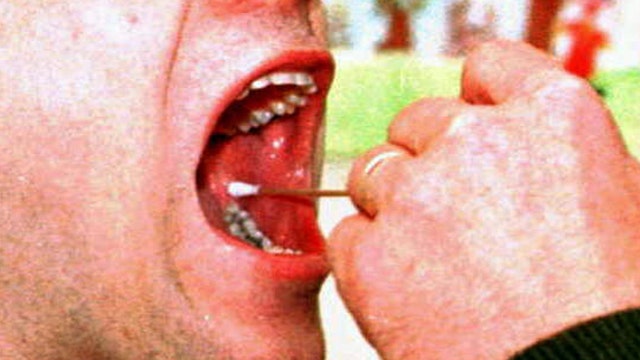
This a DNA collection which you can do -- -- -- on an inside the mouth swab.

Is really not all that much more invasive and fingerprint.

Well because we do all kinds of things -- people -- before conviction doesn't make it right again.

I'm surprised to hear conservatives such as yourself say it's okay for the government to have this DNA information that's government intrusion into your personal body to your.

To your health history here family history to all kinds of information they can get glean about you I don't see how a conservative could support -- Well Alan let me read a little I'll tell you -- -- I'll -- exactly -- conservative support it because it helps law enforcement it helped keep rapists off the streets and not an unreasonable seizure it becomes unreasonable.

If it's ripe for abuse in some way in which we believe that people's lives are being -- curiously affected where -- -- -- story.

Where somebody -- one -- story.

Of somebody whose DNA has on file whose life has been horribly adversely affected because it.

Artillery could say that underlie every little bit -- the abundantly martial law here in -- -- -- -- -- here at the this set man who was convicted of the rape and and had it overturned that when he won any appeals court order read a little bit of what they said.

-- -- -- Glenn T Harrell who wrote for the majority saying that yes this was it went too far taking his DNA said.

-- as an arrest he had an expectation of privacy to be free -- warrantless searches.

Up his biological material.

Mark you don't agree.

No I don't.

-- -- -- -- -- -- -- -- -- -- -- -- -- -- -- -- -- -- -- -- -- -- -- -- -- -- -- -- -- -- -- -- -- -- -- -- -- -- -- -- -- -- -- -- -- -- -- -- -- -- -- -- -- -- -- -- -- -- -- -- -- -- -- -- -- -- -- -- -- -- -- -- -- -- -- -- -- -- -- -- -- -- -- -- -- -- -- For a violent felony that's that's -- the -- is when -- border people's houses we're not plucking off the street and say NA.

DNA -- time it's under specific circumstances.

And Alan are you telling me that it's a better world a better country a better Marilyn in that state if we hadn't done this because -- this guy would not get in jail parade yet he'd be on the street.

I felt better about a minute that I could just responded to better factory when we observe.

The constitution you can serve regular to say you love the bill of rights but you're not respecting the bill of rights if this Fourth Amendment violation is allowed to stand it's better -- it you know what's that old saying.

Better -- a guilty person goes.

It goes for -- or event that an innocent person be convicted and jailed and -- -- -- -- What is -- about that I absolutely agree with you about that this has nothing to do.

With guilty people be adversely affect -- -- or innocent people aren't going.

And you don't know -- and if -- guilty -- -- -- -- conviction are Alan -- every -- little bit of what the dissenting judge said because she did think that this was reasonable as mark said there's a balanced approach here.

Here's what judge Mary Ellen bar Barbera -- -- -- she said by collecting DNA by rubbing and rotating a cotton swab of the inside of an individual's cheek.

-- -- much less intrusive than searches that have been approved by the Supreme Court things like routine strip searches of people arrested for even minor crimes.

And it held in the general jail population.

How do you respond -- I I think it's wrong to have repeat strip searches I think it's simply because the government does certain things as a matter of course as -- defense that doesn't mean that it's right.

That doesn't mean there -- other violations of the Fourth Amendment.

And to -- without a warrant without a an overseer or court is absolutely wrong and not the kind of country I think even conservatives won eleven.

All right mark.

-- -- the only thing is I mean I just understand -- of the kind of country I want is where reasonable law enforcement tactics are used in order to catch guilty people and put them in prison.

The system worked and worked perfectly.

In this particular.

Inmates can't be arrested march right well thought out this video that's just wrong they could stop you you could be arrested they take a swat you've done nothing wrong the government now has access to your DNA but they could use it for any reason against you even for a crime.

That you might commit down the road if -- not committed a crime yet and that is totally violate the -- -- see John I think we can all agree on is to still commit crimes leave it at that.

I have been just sit by the violent -- take my idea that I had the justices will decide that's.

Police hear the case in a couple weeks we should have a decision by -- by the way there are 28 states that do allow this happen.

After your -- our thanks to mark and Alan we'll see you against him thinking they -- -- things out.