You're watching...

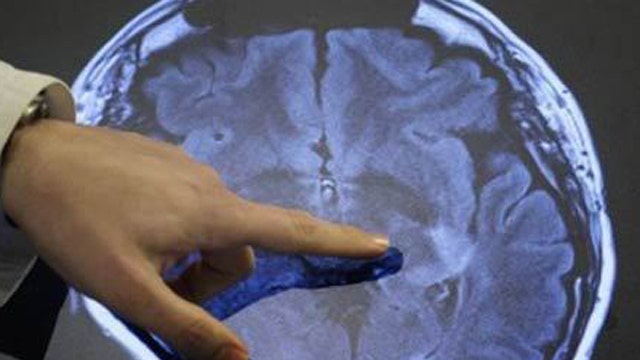
Researchers to build map of brain's activity

Details

  • Description

    Scientists embark on 10-year study

  • Duration 4:33
  • Date

Clips

Also in this playlist...

Editor's Picks

Auto-advance: ON

Auto-advance

Transcript

This transcript is automatically generated

Didn't.

Think he could tell I was excited about this -- because any time our medical eighteen can bring -- news like this.

You got to listen the scientists that are embarking on this ten year study of the human brain are going to look at all the workings and then they're gonna build a map of the activity.

They're hoping that project will lead to a better understanding for all of us to diseases like alzheimer's and parkinson's.

Two things we don't want -- Davidson body member of the Fox News medical -- team in the chief of the division of robotics at mount Sinai hospital here in New York.

And you took a look at the study I like this study I think it gives patients and family members hope to you.

Yes of course I think this -- -- very very exciting time Jamie.

Number want to be a doctor and also to really go through this look.

This is as you mentioned this about a decade the scientific work to really find all the secrets in the brain -- to really find this map.

And it's very similar to what we did with the Human Genome Project that took about ten years.

A lot of investment money to it's about 300 million dollar -- year public didn't -- was what they learned from that it was because we were able to read the unlike all the secrets.

To -- genetic disorders and and of course now it's paid off and were able to take care of a lot of our patients.

Knowing what the jeans and visited the family history is -- -- areas and this is very similar we're talking about finding out exactly what part of the brain.

Responsible for perception for memories consciousness.

On consciousness and obviously he would lead us to diseases that you mention.

-- is going to be extremely complex and and we're going to be involved in this because now people are living longer and longer so we're -- -- have that.

Autism we still don't have to do you really the cure for it we don't understand it well.

And through this we're going to be able to do this now the reason why this is even more complex than the genetic want.

Is because brain is a lot more complex you're talking about a hundred billion.

New owns the nerves that are connecting to each other and just from a one outside stimuli you're going to have so many spikes.

Going into your brain to just show you what the movement -- that this is a very exciting project.

-- the genome we know that everybody's genetic.

Make up we watch CSI we've seen the little chart.

Is different but when it comes to the brain are their similarities between all of us to tell when there's been some alteration.

In someone's brain that leads to one of these disorders.

We don't have all the answers and of course is of excellent questions know what we know is that unit -- our genetics between the three of us.

We we have a lot of common genes but -- have a lot of different.

Or parts of the gene.

Our brain supposed to be similar and supposed to be functioning and in a similar way.

Bad but I think this is an excellent investment we're looking at a very exciting next ten years.

And I think that big advantage of this study and project is.

Look there are a lot of projects going on neuroscientist.

Nano technologies that are working different labs and this has potential to really bring ever -- under the same roof.

And -- and save us a lot of money and be able to share the facts and science together.

Very excited and I think -- aside I really enjoyed the fact that this is being done however there are some critics out there say that it's based on theory and it's.

The radical and and it won't -- Provide the kind of knowledge that -- looking for -- -- -- critics guess what that's what researchers -- that's.

You may go on any invest a lot of money and time and that's what we've always do.

And end up basically with nothing and but I think that there are a lot of good things will come as a result of this.

We're almost.

We're making small steps in this research but if you really being -- thinkers and scientists the national institute of health.

I get everyone involved and put money behind it.

We will get the answer as -- were looking for and that's exciting part of the research all the time.

Know what I like to doctors the fact that with the headline that's significant that we can do this study that'll be for ten years I think it encourages young scientists.

To get involved in research that will help all of us as you said we're living longer.

A 100% in America should lead in this kind of science and research.

We know that the European -- Swiss let companies are spending over a billion in this particular one they're coming though we've exciting simulation of the brain.

That would show exactly where these nerves are.

We have to be -- either we have to get ahead in this is I'm very excited about the next time bring us a brain.

At your models I don't know have these in the office outlook and explain to us the different parts that would be so and I think that's the Seattle --