You're watching...

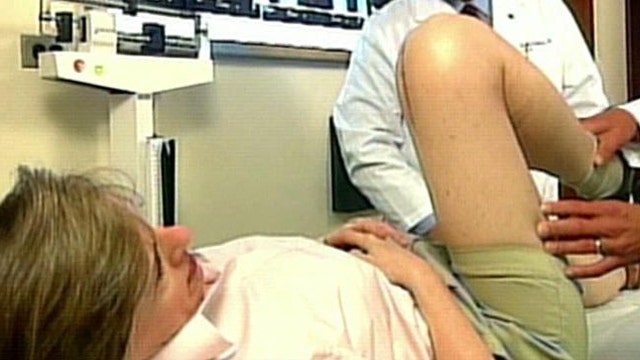
New technology for knee replacement

Details

  • Description

    How does new device work?

  • Duration 3:34
  • Date

Clips

Also in this playlist...

Happening Now

Auto-advance: ON

Auto-advance

Transcript

This transcript is automatically generated

Every year hundreds of thousands of Americans go in for knee replacement surgery.

Until now doctors have had to rely on their expertise sort of medical guesswork to make sure that they get the joint in just -- Now there's a new sensor that can help -- make sure everything's lined up properly and that could make recovery a whole lot faster.

Professor Peter Walker is a research professor at the department of orthopedic surgery at New York university's -- don't medical center.

I am of particularly in trusted in this in this story because I've had what three.

ACL replacements I'm missing some cartilage I'm probably going to be a candidate for knee replacement one of these days.

How does this -- this is obviously they have the model of the human need but when this joint needs to go.

You've got a new way -- -- to get it in more accurate.

That is correct.

-- at the moment the surgeon relies on.

Skill experience.

And obviously isn't a lot of instrumentation.

To shape the bones so that they will accept the components very accurately.

But one of them called -- -- pots of the surgery is getting the need to move very very smoothly.

After the components of placed its a very very difficult job because every patient is different.

Every patient is different and you're dealing with structures which have been arthritic the joint citizens -- be an arthritic you have to put the components in in very perfect alignment.

-- stole what the -- was like when the -- was healthy.

So.

And and if you don't get that just right what happened.

Well.

One of the things that can happen is for example restricted range of motion I mean everybody likes to.

Yet at least a 120 degrees of possible even sitting on this -- we using a 120 degrees.

-- sometimes emotion can be restricted.

Sometimes it can be restricted an extension -- quite extend the need for example they -- just some of the examples and so this a little bit of microelectronics.

Comes in misses this is.

What the surge in views and there are sensors and it tells our.

Yeah this this has.

Microelectronics.

Built into it wolf these are really little false plates.

If you can imagine a three legged stool.

And they have built -- to hear each of Alexis got false senses.

And what happens is when this surgeon is doing the procedure at surgery.

He flexes and extends moves in the sideways.

Like this them and then the false senses tell him on the computer screen him -- -- on the computer screen.

What the forces in the knee as he flexes and extends it.

The idea is to get the forces exactly equal on both sides of the -- So when he is perfectly balanced.

And in the woods it will be -- -- need to -- you use it later on and function.

It will.

Move very smoothly and be very stable and -- -- it's a better outcome for.

For the for the patient -- we believe that it that there at the hospital for joint diseases were doing a lot of follow research now and they have some of the things the will be focusing on how much better.

Can we get the function of the patient.

Already at a function is very very good with told me he's as you probably know -- the good news.

-- even better and uses we think we could make the function even better with a with a device like this.

Well I hope I'm not on your operating table soon but that's good to know if it if it comes to that for me professor Peter Walker.

Thank you mr.

Clinton think --