You're watching...

Panel Plus: 3/17

Details

  • Description

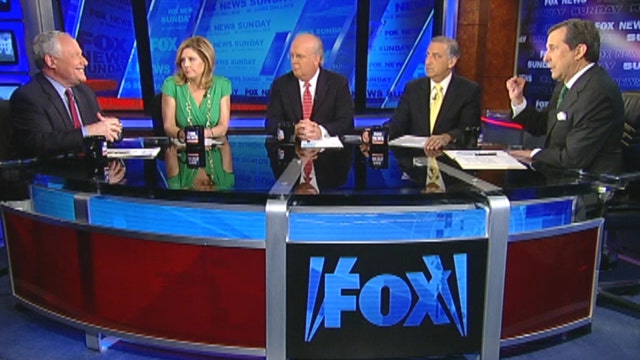
    Watch the ‘FOX News Sunday' panel, Bill Kristol, Nina Easton, Karl Rove and Joe Trippi, as they discuss the future of the Republican Party, in our ...

  • Duration 9:16
  • Date

Clips

Also in this playlist...

Editor's Picks

Auto-advance: ON

Auto-advance

Transcript

This transcript is automatically generated

And welcome to FOX News Sunday panel plus -- Bill Kristol Nina Easton Karl Rove and Joseph Trippi and as promised.

We're gonna continue our conversation from the show about the battle as we saw -- -- practice lake over the future of the party.

You've been around since the for the party was -- at the end of the second Lincoln -- from Karl.

But I'm hitting it's just a little joke but just on the Internet and every -- in the senior White House -- bottom and I noticed that and if so the question as.

You know in -- -- the historical weight how serious a split -- there in the party right now well look I'm not there there's a lot of.

Antagonism but but in reality.

You know this is what parties go through when they lose -- White House.

And it and it's what they go through when they've had a wave of new and things just like we -- in 2000.

Ten with the Tea Party and it is a question of leadership to manage to -- great.

To you know to strengthen and cannot mop up really reasonably optimistic I think it is healthy for the party to have a debate.

On foreign affairs.

What bill on it and -- you know my views are similar to bills that have read.

The with the with the with the -- -- work of Bill -- all the time to figure out what I think about foreign policy but I think it's healthy for the party to have that kind of debate and I'm confident where it's gonna come out.

But we like having these voices how would you describe the the Fisher line here what's where's the plan will -- -- a lot of foreign affairs it's.

As sort of a new isolationism vs everybody else ranging from conventional.

Peace through strength Reagan -- -- neo conservatives are there relatively united -- things but there is a difference between is sort of they Ron Paul and now Rand Paul.

Sort of neo libertarian isolationist.

But you know there -- so there's a lot of commonality there for example that the neo isolationists are huge proponents of free trade -- are also interestingly enough.

Proponents generally of immigration reform and -- -- the -- play well there's a split over over the pace at which one can achieve a balanced budget this is a tactical disagreement not a philosophical disagreement the parties united.

That we have to put our fiscal house in order and reasonably united that entitlement reforms.

You to be part of that and where the differences is over the pace with a smaller group saying you need to do it in five years.

Eight years ten years -- other groups and you need to do in ten years twelve years fifteen years.

I mean there's this a tactical disagreement not as big street -- erupted at a different place significant and perhaps growing disagreement about social -- I think that's correct did.

Particularly when it comes to the issue of gay marriage which is -- which is changed a lot of ways in which have been.

In an item and about which a lot of people would change -- mind.

I think the Republican -- parties on life support right now and and I think.

In denial about how bad this is and -- in the fact of the matter is -- They think they have not won the popular vote.

Over the last six elections for president but one time.

I mean that's and we're talking over twenty years now where this problem is is as half as good as -- the Republican coalition has -- How they're gonna expand that.

They can barely win nationally now.

When there to gather.

-- these kind of fights going on and particularly if such a fight happens in the primaries in 2016 as I suspect it will dislike Democrats had.

Seven in anything with Kennedy and Carter and get to -- fighting in 2008.

-- regulate it does happen and you end up you can you can have.

That's the one time 2008 was the one time where it actually help the party as it did help the party in 1992 until the Democratic Party and the the bitter divide.

When you have an incumbent whose challenge that's a problem but.

Generally debates in primaries -- tended to -- more often maybe not in nineteen in 2004 -- -- got Cary resident -- but I don't think anybody -- would have been a better generally don't.

The point for this conversation just a little bit because it's -- it it it's awfully easy to get to.

In -- here to incestuous and and the real question is what does the party offering voters and I have to say one of the most interesting articles and I'm not blowing smoke.

That I've run on this in weeks or months wasn't last week's weekly standard -- read it this week by Matt content that a and what he basically said is the welfare state is there it's gonna who is the welfare state going to be four -- is it going to be for the poor.

-- is going to be for the middle class and that the Republicans and I -- curious what do you agree with this that the Republicans need to have a platform that offers.

-- to the middle class and says if you're with us we're gonna help you make your lives better.

Yeah I think Republicans should be for policies that make.

The country stronger and everyone's lives better but I do think that the party has fairly and unfairly.

Been portrayed as the party of Wall Street not main street that's one of the other splits the carpet of mansion on their many cost cutting -- -- in the Republican Party.

I tend to think this is healthy if you lose two elections in a -- the worst thing you can do is say everything's fine let's not have any debates let's just kind of Xerox the last two campaigns -- -- them again so.

I think it's healthy for Republicans to have these -- basis is was healthy for the Democrats after losing.

Two elections in a row and eighty and 84 to begin to have serious debate about the future of the party Bill Clinton is very much involved in those debates.

Unfortunately the Democrats managed to nominate Mike Dukakis in 88 and lost the third elect senator elect from my point of view that's the sort of the nightmare -- sixteen is that we.

Don't have a serious debate and don't -- just -- for next time but I what I wanna go back to this question.

Of what it is you're offering I there was no question in my mind covering Ronald Reagan in 1980 what he was offering the American people and why.

You could be.

A Reagan Democrat for instance -- a suburb of Detroit work for the UAW and thank my life's going to be better.

If I vote for this guy I think question is what is it that the Republican Party is gonna offer.

That's gonna make people think that their lives -- I had -- I have some ideas on that I think weekly standard national affairs -- a lot of magazines trying to.

Suggest things to a policy alternatives that -- a little different from sort of Xerox thing.

2012 but again we were sitting here in march of 1977 which is the sort of analogy to 1980.

Jack Kemp would just have been beginning to get some attention to push -- supply side economics.

The notion that the party could -- in all these social conservatives all the people who became known as Reagan Democrats the working class.

Former Humphrey.

Kennedy -- Democrats in Ohio and elsewhere.

-- that notion was very far from the horizon -- I I agree that we need -- detailed policies on what your various you're gonna run against obamacare which I'm totally for you have to have replacement.

For obamacare if you had running its stock franc which I think is bad legislation the financial services legislation.

You have to have a replacement.

Mitt Romney and it's understandable didn't want just sort of go too far out there and putting out his own program some of these areas he thought it would be enough to just say present Obama.

Has messed things up which I think he'd had an I voted for Mitt Romney but I do think it is next time around in an open -- it's not about Obama anymore Republicans need to be much more.

Aggressive in laying out an agenda I think a lot of work has begun on that but a lot more needs to be done -- -- you get the last -- Quickly I guess.

That -- say I was just I don't think the answer is the doubling down on the on getting the support of the folks -- at the C pac conference I mean.

You know it and Romney have what 86% of conservatives.

Ninety plus percent of Republicans that's where the problem that's the problem is appealing to the middle the problem is actually holding -- that.

And appealing to the middle and I actually think that.

And Marco Rubio but it -- -- -- hard because at the gravy you're retired you have the rumor that we run the risk of alienating your -- absolutely and I think and I think that's why it rubio is is well placed to do that in his.

In his personal story in particular not and on immigration.

And you know -- really -- let's look at -- you don't have you you have problems with women particularly single women and Hispanics.

And it's not you don't have to have a sea change the party -- and Joseph I mean.

Apart young life -- wouldn't be controlling the House of Representatives and it's thirty governorships I mean it's not it it it I don't think it comes from injury really -- yes.

I just it's not a party -- like -- is -- challenged or to hold on.

To the -- -- the C packed crowd and move to the that they get those moderates -- -- -- districts were drawn specifically.

To be safe Republican districts that that no one in those districts afraid of a Democrat they're afraid of a Republican in the tea party's central Democrat did the same thing -- why having a party on life support can upon itself and thinking it is and you know it has -- -- but -- all due respect she's absolutely right.

Thirty governorships the vast majority of people in this country live in a state with a Republican governor -- with a Republican legislature.

Or at least Republican controlled release one -- I think she's absolutely right though you mentioned though keeping the right and reaching out you got to put -- in a new frame that allows -- to do that bush stated in 2000 he didn't do it by.

No -- -- well I'm gonna take the listed the issues of the right and only -- -- he found a new frame that allowed him to draw together enough people who win the election compassionate conservatives exactly but lose the popular votes aren't.

-- -- -- -- And yeah.

And I thought about it I have got a panel panel plus.

Yeah.

Plus plus anyway thank you -- Let us know what you think that's really a fascinating conversation and it's obviously one is gonna continue for the next few years second with us throughout the week -- -- -- Monday -- -- Wallace unplugged.

You can find it right here at FOX News Sunday dot com we'll see you back here next.