You're watching...

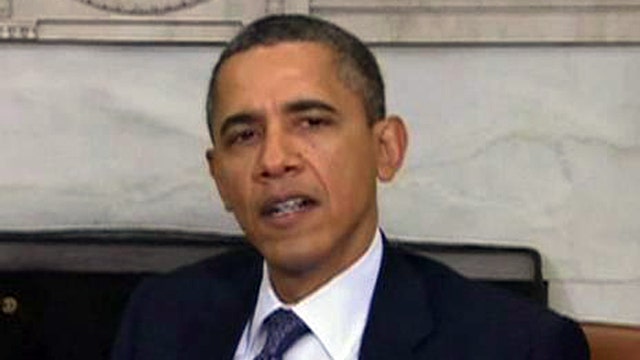
Obama prepares for trip to Israel

Details

  • Description

    What will be accomplished during visit?

  • Duration 4:46
  • Date

Clips

Also in this playlist...

Editor's Picks

Auto-advance: ON

Auto-advance

Transcript

This transcript is automatically generated

All right now the president preparing for a landmark trip to Israel his first as commander in chief meeting on Wednesday with Israeli prime minister Benjamin Netanyahu.

Whom some have describes he's had a frosty relationship wet.

This week the two leaders are critical goals in mind joining us now Stephen -- former deputy assistant to Vice President Cheney for national security affairs.

And currently CEO -- DC international.

Advisories to Stephen a lot of politics at play.

With this trip.

For both of these leaders if we take a step back for just a moment and concentrate on the best case scenario.

For America and for Americans what should come out of this meeting.

Well best case scenario would be to find some common way ahead for dealing with the major threats.

That in that affect Israel but affect the region more broadly.

The rise of the you Ronnie and threat is not just an Israeli or US Israeli issue affects.

Many countries around the gulf and also the broader region and then there's the ongoing civil war in Syria which in many ways is in Iran -- proxy war.

With other powers with great consequences -- with no land.

And so away for in those areas would be ideal but I have to confess I have limited expectations of this trip accomplishing those -- Well -- first and foremost if you're looking at major leaders dealing with other major leaders -- always a degree of personal rapport and trust.

That is key to sealing a deal we're trying to see compromise on both sides.

And president Obama's relationship with the prime minister of -- Israel.

Isn't one of those relationships of warmth trust.

In a position to move some kind of a new agenda forward in my estimation.

If he's able to that will be wonderful and good for the United States.

It's interesting because -- -- you look at the region overall whether it's Egypt or Syria eleven on Jordan there's a lot of chaos.

And Israel remains the -- democracy.

In the region so.

So what do they have to disagree upon when it comes to the priorities of what to accomplish in the region let's hold it with preventing a bigger breakthrough.

I think there are two areas where there are stumbling blocks one is the Obama administration really doesn't seem to have a theory of how it intends to deal with the region.

Post Arab Spring which is really been a narrative where there's broad turmoil arc of instability from Afghanistan Pakistan all the way to -- Algeria.

On this trip in particular he's focusing once again an Israeli Palestinian negotiations.

I myself see that as somewhat of a policy trap.

Well it's incredibly important for domestic politics in Israel it is not the driver of peace and stability across a broader region I think those conflict of visions.

Maybe lack of strategy on one hand is really a major stumbling.

Lots of greens and other news -- -- there's talks regarding Iran that are happening today in Istanbul as part of this process says there's a continual review all.

What's happening with sanctions and where Iran is as far as nuclear weapons.

How does that come into play -- -- with the president going to the region this week.

And what message could potentially be sent to a run.

This week regarding.

What we're going to do.

Well I wish that the president's itinerary was a more broad -- -- area across the region.

Because unfortunately.

When he goes to Israel and talks about Iran against I think a false impression that this is -- US Israeli issue only when it's a much bigger issue.

I think it's very important for us to stand shoulder to shoulder with our -- alliances have to mean something -- affects our commitments and other parts of the world -- -- dealing with North Korea.

Just the same and what's happened in North Korea unfortunately.

Is sending a negative signal to Iran impunity.

In achieving the world's worst weapons.

Is basically a green light to Iran to ignore whatever sanctions may come their way.

So let's let's end our conversation going -- just once again -- we started for what this means for for the American people Peter Berkowitz had an interesting article in real clear politics and he made the argument that.

The president wants less influence in the Middle East -- is more influence.

Regardless -- this trip.

Your opinion on that and what is -- consequence of either action.

I think there's -- moment of truth to what he says because the president hasn't really put affordable -- agenda hasn't really said.

What we intend to try to influence what -- will use to influence.

The broader region he said leaders -- variously must go.

That we set a red line with Iran but never really said what we would be willing to do about these things that does send a signal.

He's really willing to take a somewhat laissez Faire approach to let the chips -- fall where they may in the broader region.

That's a departure from past US policy.

Stephen -- again former deputy assistant to vice president Cheney for national security -- Stephen great to see as always thank you.

Thank you very much on --