You're watching...
Road to Recovery: Environmental Learning in Schools
Details
-
Description
Making a difference in the lives of students
- Duration 6:02
- Date May 24, 2011
You're watching...
Making a difference in the lives of students
Also in this playlist...
Auto-advance: ON
Auto-advanceThis transcript is automatically generated
Now on -- white now the desk and join and we got another guest here.
To show you -- brand -- Bridget -- Walters the director of youth programs for the Nature Conservancy and you've had at the organization's leap program.
Which is leaders and environmental action for the future you're -- -- you here's part of our road to recovery things that are working.
Tell us about your.
Your business your job and what's happened.
The Nature Conservancy is cause largest conservation organization working around the world that the tax.
The national resource and we all depend on for clean air clean water.
And millionaires and I'm not for the future program -- -- really innovative program that works in partnership with the Obama high school -- -- -- John how are the next generation of environmental leaders and put them -- with them -- the skills and knowledge to address.
The most pressing environmental problems that we have been there in our country today and you got a new green ribbon program.
That's actually a program the federal government as -- kind of -- -- And that it's working to identify innovative high school that are working.
-- promotes them.
Which is science technology engineering and math fields so really to encourage the next generation.
To pursue science and engineering careers.
Joining us live on -- as well stay with us through the hour it would appreciate that Eric the other bomb.
Time to join in on the conversation as well and -- we were just talking with us.
Representative Phil -- about going out high schools and talking high schools and questions about.
On helping with the debt ceiling -- just at least being informed about what's going on now on in making cuts so you've mentioned high school students talking about.
You know working with green programs how how is the reaction been from the.
-- Tremendous.
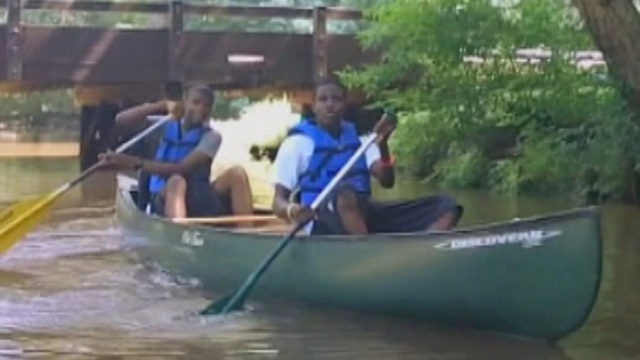
Am I young people get you know getting exposed to science and technology carriers -- the cool factor to it select though every year with the city -- these are young people that we work -- We -- students from Alabama high -- to -- mark on our nature -- in the summer southern literally doing.
-- administration.
-- numbers -- -- these -- -- kids that we send out.
-- -- and areas from as far flung at Montana.
To them rocky coast of man that they act in India the Delaware based as a New Jersey so exciting young people the science carriers through real hands on opportunities commission of this program and how big is the program -- -- schools we talked.
We started in 19951.
And how high it was the first time Obama has called open its -- right here in the -- Manhattan.
Today or in the number seventeen school.
I'm -- -- over sixty in the country that are working really using science to inform environmental.
Environmental curriculum across the board.
So it's about seventeen -- I'm touching about 20000 students.
And we work to to provide opportunities for about a hundred of those kids to get those real world jobs and the -- -- -- here please think I you know.
I think is a perfect example of you right in the high schools what you're doing that's cool.
You can really gauge high school kids at that age with what you're doing and then -- can you know influence of features as opposed some site congressman -- you don't have a good chance to.
Say otherwise but they got one device doesn't talk about the debt ceiling that's not cool nobody cares about it I think it don't know what they're doing that's the exact price for a gallon of and the right place.
That is to find kids for our future.
Well thank you thank you and I think the interesting thing about it we've done our first alumni survey.
And as you know according to the bureau of labor and statistics only 6% of American students are graduating with science degrees in this country.
What we're finding my apartment and about a high -- -- them providing these real -- or more opportunities.
As that I young people are going into the rescinding science field at a rate of 34% that's about one -- -- that are going down.
The field in my -- science so it's pretty interesting when you look at the the national comparisons for the -- and he -- It's long term for the students -- -- talking about the the impact in the difference -- it's making in their lives do you feel.
You know hopefully the goal I'm sure is sport to be a long term thing for the rest of their lives do you feel that that's getting through words just kind of a quickie.
Our environmental health.
I actually think it's very sustained I think the partnership with -- -- -- high schools -- -- the kids are getting in my -- curriculum.
In those four critical years leading up to college and what we're providing as that.
Summer Immersion in nature so it's different -- -- one off one day experience out and out in nature.
What we're providing is first paid job for young people first extended time and nature.
-- -- and -- first time living independently away from their friends and families so that's profound experience that really sticks with -- -- carry through with that in college and and higher education.
You mentioned that people these children are interested and that they've expressed an interest in there and it really getting into the what a level of excitement and when we talk to them what are they asking what do you what has been surprising to you.
On any organization about the types of questions come from these high -- to.
Well -- good question.
They're -- and it is -- I was you know we're going to high schools and -- the high school I will be as well prepared as -- possibly Indianapolis and back it asks me something that prodigy from.
Think it's yeah.
I I've -- program the most surprising thing has and I'm.
You know back and that fifties.
There was a huge push around and I want science and getting young people -- -- nature.
-- and we are growing up in -- society that was much more world people are drawing -- more connected with nature.
Today's kids are going ethics and very much.
Very urban environments so -- getting them out -- nature.
The most surprising thing has been that there's a huge Fear Factor there really so getting over our.
You know being in nature.
And getting accustomed to that takes a good one to two weeks so the urban legend this is one of the most surprising things to me coming out of this experience -- running the program for eight years.
Is that.
Kids when they first come in -- contact with things like dragon -- me.
Believe these things can tell them right out of -- -- it's a whole you know can't not that.